
In today’s geopolitical climate, energy security and resource efficiency are no longer separate agendas, they are survival imperatives.
The Opportunity Cost of ignoring our domestic waste streams is the staggering price we pay for fuel imported from unstable regions. We are effectively paying twice: once to dispose of our waste, and again to import the energy that waste could have provided.
The transition to a fossil-independent future isn’t about hunting for new, rare resources; it’s about finally using the ones we already have. It is time for a global “Trash to Cash” pivot.
How the SWESTEP platform delivers this transition:
· Value Extraction: Converts hydrocarbon based waste including plastics into renewable synthetic fuels and sustainable liquids/oils
· Commercial Viability: Replaces the “cost of disposal” with the “revenue of production,” fixing the national balance sheet.
· Domestic Resilience: Eliminates reliance on global supply chains by producing fuel where the waste is generated.
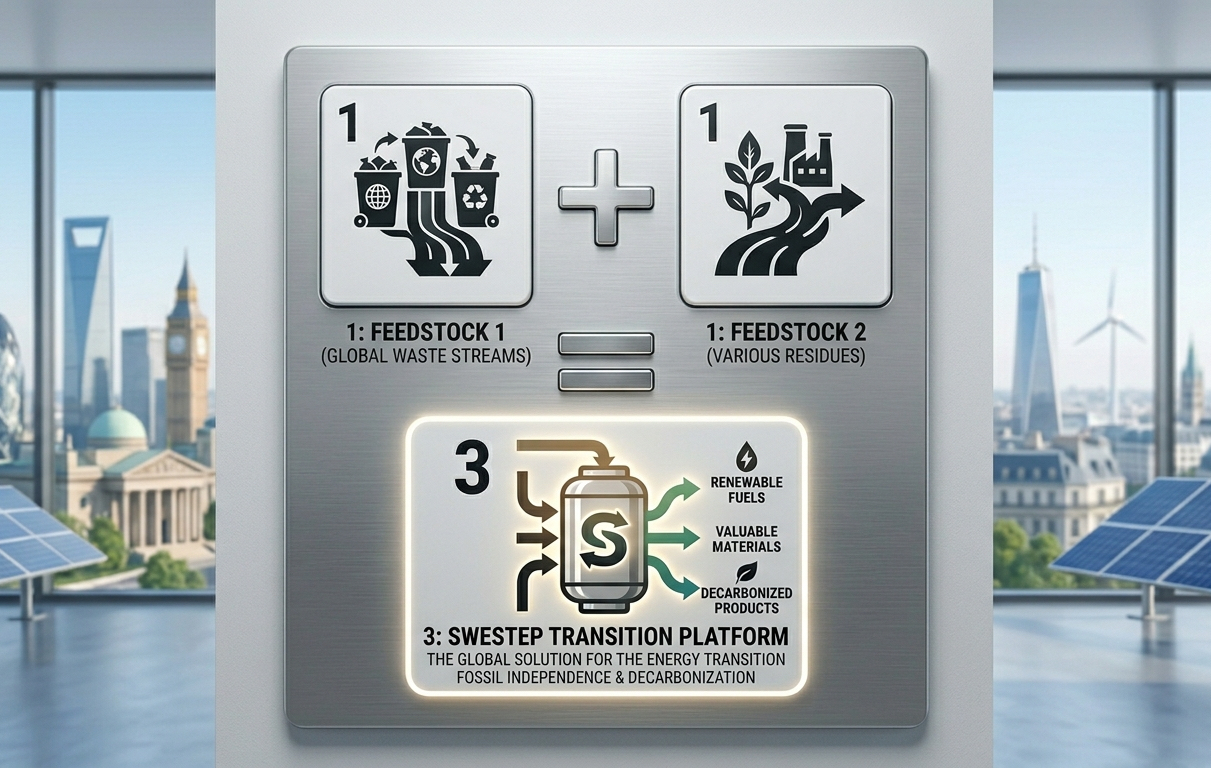
· Synergy in Action: Solves the waste crisis and the energy shortage simultaneously, creating a 1+1=3 effect for the local economy.
Energy independence isn’t an ambition; it’s a technical reality we’ve been throwing away for decades. – And the solution is closer than you think.
Interested – Contact@swestep.com
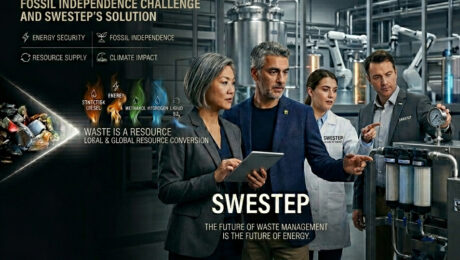
The path to a fossil-free future does not have to involve a total phasing out of existing infrastructure. The old linear system, where we pay to get rid of waste and then pay again to buy energy, is an economic anomaly that we can no longer afford. Instead, future leaders see the opportunity in maximizing the value of every molecule in society’s waste streams.
Is the solution to the world’s energy crisis not hidden deep underground, but visible on the surface in the form of our own waste? The old linear system, where we extract, consume and throw away, has reached the end of the road. In its place, a new vision is now emerging where waste is seen as one of the planet’s most underutilized resources.
The Swedish company SWESTEP offers a path where fossil-freeness is no longer a cost item, but an investment in local growth. The end product is, among other things, a renewable synthetic diesel that is identical to the fuels that power today’s heavy vehicles, ships and generators, but with a fraction of the climate impact.
For those in charge of logistics, defense facilities or urban environments, this means an opportunity to solve waste logistics and energy needs in a single seamless operation. The vision is simple: A society where nothing is lost, and where local resource conversion is the engine of a new, fossil-free era.
It’s a double win: a radical reduction in the climate footprint and a simultaneous strengthening of the balance sheet. Decision-makers who choose to see waste as a raw material are not only building a sustainable society, they are building an economic fortress in a changing world.
contact@swestep.com
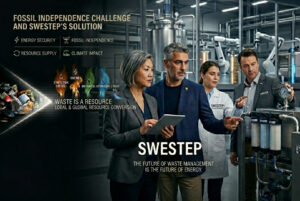


One Waste Stream → Multiple Sustainable Fuels
The global energy transition is accelerating, and industries like shipping, aviation and heavy transport urgently need scalable alternatives to fossil fuels.
The real challenge is not engines.
The real challenge is how to produce enough sustainable fuel without rebuilding the entire energy infrastructure.
At SWESTEP, we approach this challenge through circular carbon utilization.
Our catalytic conversion technology transforms hydrocarbon-based waste into synthetic diesel (EN590 quality) — always the primary output of the process.
At the same time, the process generates CO₂ and H₂O as output streams.
Instead of treating these as by-products, they can become valuable resources. By integrating additional processes, the CO₂ and H₂O can be used to produce green methanol or SAF, potentially creating almost the same energy volume as the diesel itself.
In other words:
One waste stream → multiple sustainable fuels.
- Diesel
- Methanol
- SAF
And because these fuels are drop-in compatible, the transition from fossil to non-fossil fuels can happen without major changes to existing engines, transport systems or fuel infrastructure.
Scaling the energy transition will require solutions that are not only sustainable — but also practical and deployable today.
The transition from fossil to non-fossil fuels does not always require new systems — sometimes it requires better use of the carbon we already have.
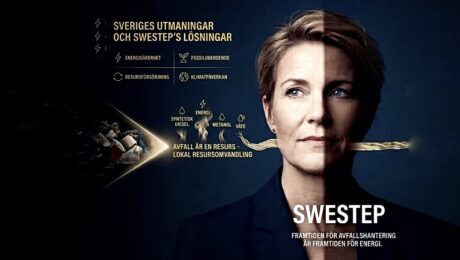
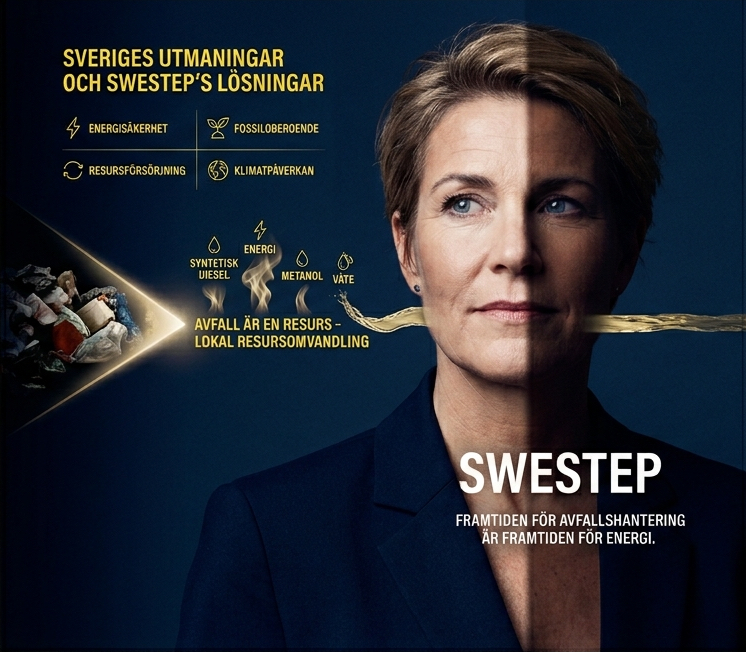
Hur kan vi hantera avfall på ett hållbart sätt som är ekonomiskt sunt och strategiskt försvarbart på lång sikt?
I takt med att industrier och myndigheter söker efter skalbara och kommersiellt gångbara lösningar har rollen för innovativa avfalls-till-energi-processlösningar aldrig varit viktigare. Att se avfall endast som en kostnad hör till det gamla systemet.
I dagens värld måste avfall ses som en resurs, och det är här SWESTEP kommer in i bilden.
Det svenska bolaget SWESTEP’s processteknologi kan omvandla kolvätebaserat avfall till förnybar syntetisk diesel, energi och i nästa fas även metanol, väte och flytande CO₂. Detta skapar en möjlighet att gå från traditionell avfallshantering till lokal resursomvandling med verkligt värde för både samhället och miljön.
I en alltmer osäker värld behöver vi lösningar som kombinerar klimatansvar, motståndskraft och affärslogik och SWESTEP visar att framtiden för avfallshantering också kan vara framtiden för energi.
Det handlar inte om en enskild lösning, utan om att knyta ihop områden som redan är beroende av varandra.
Intresserad – contact@swestep.com

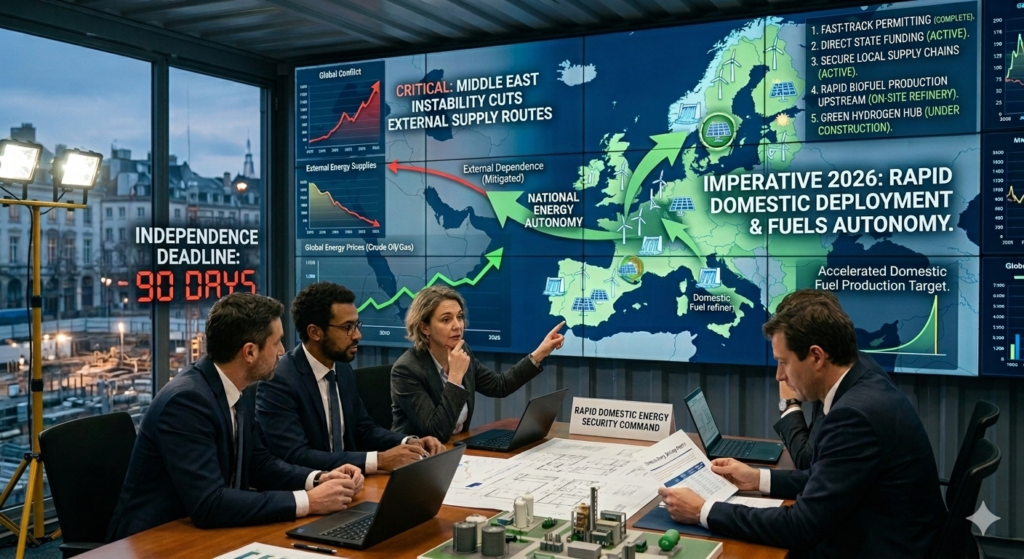
The headlines are clear, but the strategy is often lagging. Geopolitics is no longer just a diplomatic challenge, it is an energy crisis. As conflict in the Middle East continues to destabilize global supply chains and send energy prices into an unstable and volatile market, Europe finds itself at a crossroads.
The era of relying on external, unstable regions for the lifeblood of our industry and transport must end. True independence requires more than just “wanting” local production, it requires a radical shift in how we view our own domestic resources.
The Paradox of Waste
While we scramble for imported fuels, we are sitting on a mountain of untapped potential. Every year, millions of tons of hydrocarbon based waste, including non-recyclable plastics and biomass residues, are buried in landfills or burned inefficiently.We are literally throwing away the very building blocks of the energy independence we crave.
The Solution is Closer Than You Think – The SWESTEP Bridge
The transition to a sustainable, independent energy system doesn’t require a miracle, it requires a bridge. SWESTEP provides that practical link between today’s waste problem and tomorrow’s fuel security. By taking control of industry and municipal waste streams, we can bypass geopolitical instability and produce produce renewable fuels and energy products locally.
What SWESTEP brings to table
1. Multi-Fuel Output – Production of renewable synthetic diesel, methanol, and hydrogen from a single waste stream.
2. High-Value Recovery – Transforms low-value hydrocarbon waste into premium energy products.
3. Local Production – Enables countries to produce fuels exactly where they are needed, reducing transport costs and risks.
4. Energy & Performing Chemicals – In step two can turn environmental burdens into industrial resources.
5. Energy Security – Decouples local economies from Middle Eastern price shocks and supply disruptions as well as building national emergency stocks as strategic oil reserves.
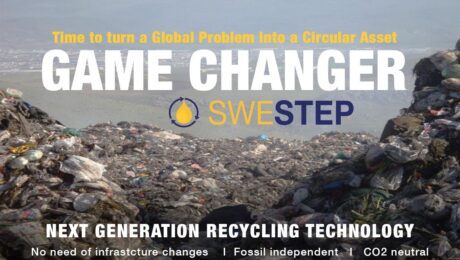
 See waste as an asset that can turn a global problem into a circular asset for the creation of a truly fossil-independent and sustainable society
In order to create viable conditions for sustainable climate transition to a true fossils independent society we must be realistic from both an economic and environmental perspective.
All alternatives regarding area of use (From energy and fuel to performance chemicals) must be considered before making a decision on what to support and prioritize by decision-makers.
In order for our natural environment to be in balance, a functioning biological diversity is required where soil, vegetation and wildlife are allowed to live in harmony with humanity.
The focus should therefore be on stopping the depletion of mother earth resources; assets and raw materials for the production of consumer goods and energy.
– Waste is today a global problem that can replace the world’s fossil dependence by refining it into an asset. It is neither sustainable nor defensible to incinerate waste or pile it up in landfills. (The world supply of waste as a raw material / feedstock is today as large as the world’s oil resources).
“Synthetic oil and fuels have become an important way of reaching carbon neutral utilization for a sustainable and circular society”.
SWESTEP has developed a Catalytic Conversion recycling technology (Feedstock Recycling and Energy Recovery) that mimics nature’s own decomposition process. The CC Process offers a fossil-independent alternative where only hydrocarbon-based waste and residues are used as feedstock / input material for the production of fuel, energy and a chemical raw material to be processed into performance chemicals.
SWESTEP’s end products are renewable synthetic oil/fuels, (For energy or/and fuel for the entire transport sector – Air, Land and Sea)
or
A synthetic raw oil that can be refined into performance chemicals as a fossil-free alternative to the entire Petrochemical industry sector.
Swestep offers a ” Sustainable Game Changer” where we can stop depleting our earth’s resources and turn waste into assets with high value.


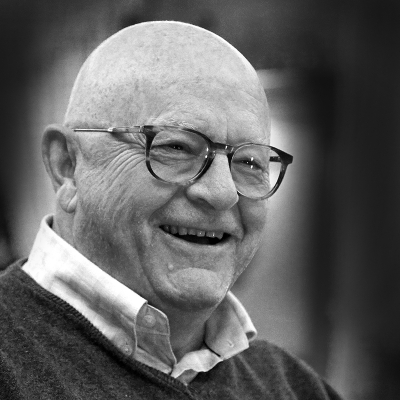
Dear Swestep friends, partners and stakeholders
As the year draws to a close, we would like to express our sincere appreciation for your trust and cooperation over the past year. Together, we have continued to build, refine and strengthen the foundation of SWESTEP through focused efforts and long-term commitment.
At SWESTEP, we believe that progress is driven by sound decisions and taking one step at a time. The work carried out over the past few years has been guided by this principle, and it has positioned us well for the next phase of our journey.
Looking ahead, 2026 appears to be a year where we expect to reap the rewards of sustained efforts and strategic focus. Several agreements that have developed over time will be brought to light, translating preparations into concrete results. Already in the first quarter, we expect encouraging results that reflect the strength of the groundwork that has been put in place.
We enter the coming year with confidence, clear direction and optimism about what lies ahead. We look forward to continuing our collaboration and taking the next step together towards shared success.
We wish you all a Happy New Year.
Karl Magnus Mattsson and the SWESTEP Team

Transforming Taiwan’s Food Waste into Sustainable Aviation Fuel: A New Path Toward Green Energy
By Weng Yung-chuan (Article in Chinese – See LINK )

Huang Jieping, CEO of Global Energy Technology
Taiwan’s approach to food waste disposal may soon undergo a major transformation. Huang Chieh-ping, CEO of Global Energy Creation Technology, said that converting kitchen waste into Sustainable Aviation Fuel (SAF) is not only possible but technologically feasible. The Swedish sustainable technology firm SWESTEP, with cutting edge technology in this field, has developed advanced processes for such conversion, and Global Energy Creation serves as SWESTEP’s exclusive representative in Taiwan.
According to Huang, Taiwan’s Ministry of Environment is currently exploring ways to promote the energy recovery and reuse of food waste. The ministry is drafting the Resource Circulation Promotion Act to upgrade food waste processing technologies and transform discarded materials into renewable energy resources.
SAF is a new-generation fuel produced from renewable materials such as plants, seeds, and used cooking oil. Unlike conventional fossil-based jet fuel, it can drastically cut carbon dioxide and other greenhouse gas emissions. “Aviation accounts for about 2–3% of global CO₂ emissions,” Huang explained. “Using SAF can reduce greenhouse gas emissions by up to 80%, making it something of a dream fuel”.
Europe and the United States are leading Asia in SAF development and adoption. Japan Airlines (JAL) conducted Asia’s first experimental flight using SAF in 2009, and since 2021, commercial flights have been operating with SAF blends. Both JAL and All Nippon Airways (ANA) have emphasized that SAF will be indispensable to the aviation industry’s future.
Huang further revealed that SWESTEP has already launched new projects in Taiwan focusing on SAF and green power, engaging in discussions with major international companies in the aviation, maritime, and energy sectors. Meanwhile, Yuan Yu Biotechnology, a local bamboo furniture manufacturer, plans to adopt SWESTEP’s technology to convert bamboo waste into SAF — potentially becoming the world’s first example of turning bamboo residues into aviation fuel.
SOURCE – Economic Daily News
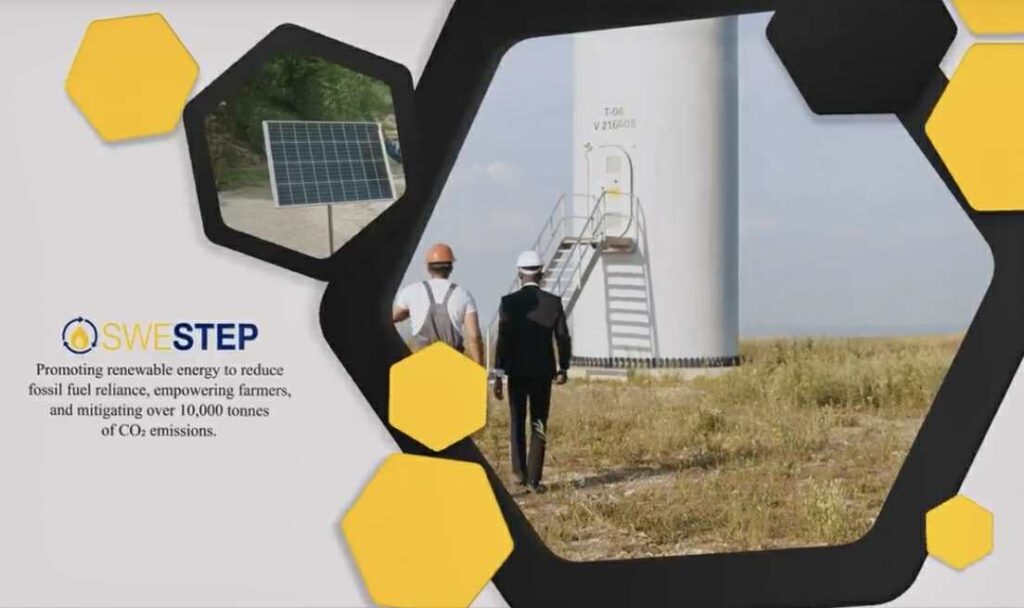
SWESTEP is proud to be recognized as a finalist in the global competition EUTECH SDG Awards 2024 in category 7: – Affordable and Clean Energy
SWESTEP’s technology offers an innovative solution for future energy needs that is green, sustainable and at the same time economically justifiable and profitable.
- Our technology shows how we can already meet future energy needs today – both for the sake of the environment and the economy.
- Our vision is not only about environmental transition, but also about creating commercially profitable opportunities. Together, we drive the transition towards a cleaner and more sustainable society.
Becoming a finalist in such a prestigious award confirms that our solution is both relevant and scalable on a global level. We share this honor with other groundbreaking initiatives that show how the world can achieve the global goals (SDGs).
We thank the European Technology Chamber (EUTECH) for the recognition and look forward to continued collaboration to accelerate the transition towards a sustainable energy system.
Want to know more about our solution?
Feel free to get in touch – we believe in partnerships that drive real change.